Choosing skincare packaging for new brands feels overwhelming at first. You have a formula, a brand idea, and a launch date, but you also face dozens of decisions: bottle or jar, flip-top or screw cap, plain or printed, stock mould or custom. Each choice affects your cost, your product’s shelf life, and how customers judge your brand before they try it.
Demand for personal care is rising in Sri Lanka. A University of Moratuwa study (August 2025) on cosmetic packaging notes rapid growth in personal-care consumption, which means more founders are launching and more shelves are filling up. This guide walks you through each decision in the order you will face it, so you can brief a manufacturer clearly and avoid expensive mistakes. At JPI, we make cosmetic bottles and jars Sri Lanka brands rely on, along with caps and tubes, all in-house, so we have written it from the point of view of a manufacturer who helps new brands launch.
Start with your formula: viscosity, air and light sensitivity
Your formula decides your packaging, so start there. Three properties matter most.
- Viscosity: Thin liquids such as toners and serums need controlled dispensing. Thick creams need wide openings or squeeze tubes. A lotion that pumps well in a bottle may not scoop well from a jar.
- Air sensitivity: Some ingredients lose strength when exposed to air each time a customer opens the pack. Narrow openings, pumps, and tubes limit air contact, while open jars let in more air.
- Light sensitivity: Ingredients such as vitamin C and retinol degrade in light. Opaque or tinted materials protect them better than clear packs.
Write these three answers down before you talk to any supplier. They narrow your options faster than any design idea, and they help your manufacturer recommend a pack that protects your product instead of just displaying it.
Bottles vs jars vs tubes: which suits your product?
Each format suits different products, budgets, and customer habits. Use this table as a starting point.
| Format | Best for | Strengths | Watch out for |
|---|---|---|---|
| Bottles (with flip-top, pump, or screw cap) | Lotions, toners, serums, cleansers, body wash | Easy dispensing, clean hands, good protection | Very thick formulas may not flow well |
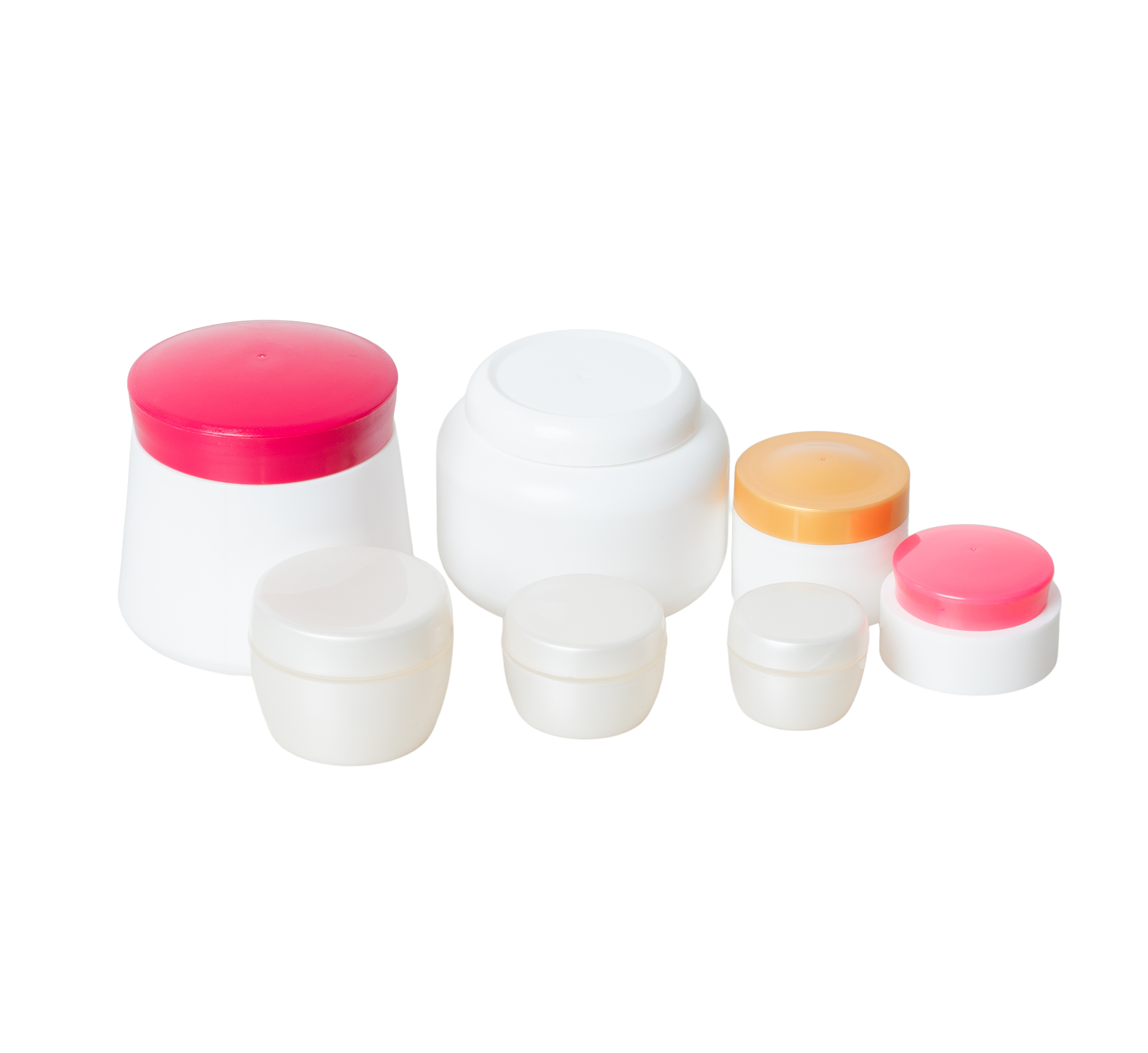
| Jars | Creams, balms, masks, scrubs | Wide opening, premium feel, easy to fill | More air and finger contact, so formula must be stable |
| Tubes | Creams, gels, sunscreens, hand cream | Hygienic, portable, minimal air exposure | Less suited to very thin liquids |
Whether you need cream jar packaging, lotion bottles, or cosmetic tube packaging, many skincare ranges combine formats: a lotion bottle, a cream jar, and a hand cream tube. When you plan a range, keep the closure style, color, and decoration consistent, so customers see one brand across every product. We explain how consistency builds trust in our guide to why packaging uniformity builds brand trust.
Choosing materials: HDPE, PP, LDPE and laminated tubes
Material choice affects feel, protection, and price. The main options for skincare packaging are:
- HDPE (high-density polyethylene): A firm, durable plastic with good chemical resistance. It suits lotion bottles and many creams, and it works well in opaque or tinted colors.
- PP (polypropylene): A light, heat-resistant plastic that suits jars, caps, and closures. It offers good clarity in some grades and strong resistance to many ingredients.
- LDPE (low-density polyethylene): A soft, flexible plastic that suits squeezable bottles and tubes where customers want a gentle press.
- Laminated tubes (ABL and PBL): Tubes built from layered materials that combine barrier protection with printable surfaces. ABL tubes use an aluminum barrier layer, and PBL tubes use a plastic barrier layer, which gives both strong protection and a smooth finish for graphics.
No single material fits every formula. Ask your supplier to recommend two options and explain the trade-offs in price, look, and protection. Your formula chemist should also confirm compatibility, which we cover below.
Caps and closures: flip-top, screw, snap-on and press-on
The closure is the part customers touch every day, so it shapes their experience as much as the container does.
- Flip-top caps: Convenient one-handed opening, popular for lotions, cleansers, and shampoo-style products. Lotion bottles with flip-top caps suit daily-use products that customers open often.
- Screw caps: Secure and simple, ideal for jars and for products that need a firm seal.
- Snap-on caps: Quick to apply and easy to open, common on tubes and smaller bottles.
- Press-on closures: A neat, low-profile option for certain jar and bottle designs.
- Child-resistant and tamper-evident options: Useful where safety or product integrity matters, depending on your market and product type.
Match the closure to your formula and your customer. A thick cream needs a wide, easy-to-clean closure, while a runny toner needs a controlled opening that prevents spills.
Choosing launch sizes (25 ml to 1 L)
Launch sizes should match how customers will buy and use your product, not just what looks good on a shelf.
- Small sizes (around 25 ml to 50 ml): Ideal for trial products, serums, eye products, and sampling. They keep first purchases low-risk for customers and keep your own inventory small.
- Mid sizes (around 100 ml to 250 ml): The core range for most lotions, cleansers, and creams, and often the best-selling format.
- Large sizes (500 ml to 1 L): Suit body wash, bulk lotion, salon or spa use, and refill packs.
For a first launch, most brands choose one or two sizes per product rather than the full range. This reduces moulding, decoration, and stock costs while you learn what customers buy. You can add sizes later once demand is clear.
Decoration on a startup budget: stickers, screen printing, hot foil and IML
Decoration can transform a plain pack, and you can start modestly and upgrade as you grow.
- Stickers and labels: The lowest-cost starting point. They suit small runs, easy design changes, and early testing, with glossy, matte, or waterproof finishes available.
- Screen printing: Prints directly on the pack for bold, durable graphics. It works well for logos and simple designs on bottles and caps.
- Hot foil stamping: Adds metallic finishes such as gold or silver, which give a premium look on caps and logos.
- In-mould labelling (IML): Fuses the printed label into the pack during moulding, creating a scratch-resistant, full-color finish. IML suits brands ready for larger runs and a polished look.
A practical path is to launch with labels, move to screen printing or foil as sales grow, and consider IML once volumes justify it. Ask each supplier to quote your pack plain and decorated, so you can see what each upgrade really costs.
Stock moulds or custom moulds for your first launch?
For packaging for a skincare startup, most new brands should start with a stock mould and custom decoration. A stock mould uses an existing shape, so you skip the tooling cost and reach market faster. You still build a distinctive brand through color, closure choice, and decoration.
A custom mould makes sense when a unique shape is central to your brand, or when your volumes are high enough to justify the investment. Because we make moulds in-house at JPI, we can guide you on when each route pays off. For a full breakdown of mould costs, MOQs, and timelines, read our buyer’s guide to custom plastic packaging in Sri Lanka.
Test compatibility and stability before you scale
Never scale a pack until you test it with your actual formula. Compatibility testing checks whether your formula reacts with the packaging, and stability testing checks how the product and pack behave over time and under heat, light, and storage conditions. Problems such as discoloration, leaking, cracking, label damage, or formula changes show up here, long before customers notice them.
Cosmetic stability and compatibility testing is a normal step for professional brands, and your formulator or test lab can advise on the right protocol for your product. Order small sample quantities first, fill them with your real formula, and test them before you commit to a large run. Samples cost far less than a recalled batch.
Planning first-order quantities and reorders
Your first order should balance cost per unit against the risk of unsold stock. Order enough to launch and learn, but not so much that you lock cash into packaging you may change. Many founders start with a modest run, track sales for a few months, and reorder with improved quantities and any design tweaks.
Plan reorders early. Production, decoration, and delivery all take time, so place your next order before your stock runs low. At JPI, we support low MOQ runs for new and growing brands, so you can test packaging in the market and scale gradually. Producing locally also avoids the long waits and stock-outs that imported packaging can bring, which helps you keep your launch on schedule.
Frequently asked questions
What is the best packaging for a new skincare brand?
The best packaging depends on your formula. Thin products suit bottles, creams suit jars or tubes, and sensitive ingredients need opaque or low-air formats. Start with your formula’s viscosity, air, and light sensitivity, then choose the format, material, and closure.
Should I choose jars or tubes for creams?
Jars give a premium look and easy access but expose the cream to more air and finger contact. Tubes keep products more hygienic and protected. If your formula is air or light sensitive, tubes often protect it better.
What size should my first skincare products be?
Most brands launch with one or two sizes per product. Small sizes suit trials and serums, while mid sizes suit core lotions and creams. Start narrow, learn what customers buy, and add sizes as demand grows.
Do I need a custom mould for my first launch?
Usually no. A stock mould with custom decoration lets you launch faster and avoid tooling costs. Move to a custom mould when a unique shape is central to your brand or your volumes justify the investment.
How can I decorate packaging on a small budget?
Start with stickers or labels, which suit small runs and design changes. As sales grow, upgrade to screen printing or hot foil, and consider IML once volumes justify the higher setup.
Why should I test my formula in the packaging before scaling?
Testing shows whether your formula reacts with the pack or changes over time. It catches leaks, discoloration, and damage early, so you fix them with small samples instead of an expensive full production run.
Talk to us about your launch packaging
Launching a skincare brand? Send us your product list and target launch date. We will recommend bottles, jars, or tubes for your formula and send samples so you can test them. Contact our team with your product type, volume, quantity, and launch month, or message us on WhatsApp, and we will help you plan skincare packaging for new brands from first sample to first order.